SEPTIC TANK PUMPING IN NORTHERN INDIANA
Regular pumping is the single best thing you can do for your septic system. It keeps solids from building up, protects your drain field from damage, and catches small problems before they turn into expensive ones.
SEPTIC TANK PUMPING PROCESS
No guesswork, no surprises — here's exactly what happens when we pump your tank.
LOCATE
01
We find the tank using physical identifiers on the house, probing with our Mighty Probe, and, if necessary, flushable transmitters.
DIG
02
If the lids aren't already accessible, we get our hands dirty and start digging! Don't worry, we do our best to not disturb more of your beautiful yard than necessary.
PUMP
03
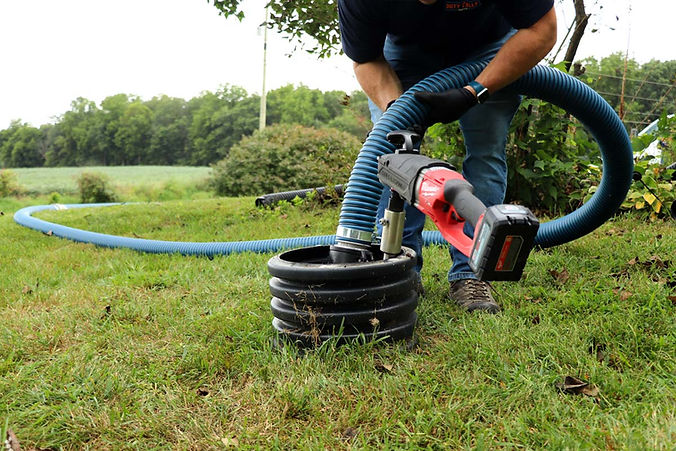
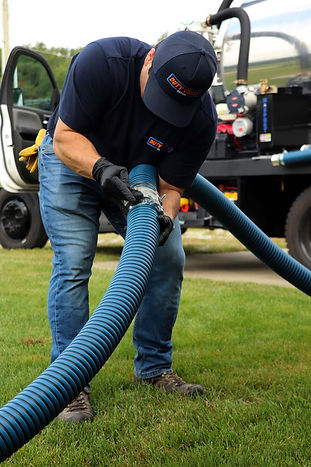
Using our mighty pump truck and our handy dandy sludge mixer, we pump out the tank's contents completely and do a visual inspection while it's empty to catch any foreseeable issues.
DUMP
04
Waste is hauled to a local, licensed disposal facility, where it's logged and handled in line with state and local regulations.
SIGNS YOU NEED SEPTIC TANK PUMPING
Slow-draining sinks, tubs, or toilets
Gurgling sounds in the plumbing
Sewage odor near the tank or drain field
Standing water or unusually lush grass over the tank
You can't remember the last time your tank was pumped
WHAT'S INCLUDED WITH STANDARD PUMPING
A clear line between what's covered in a standard pump-out and what falls outside it — so there's no confusion when we're standing in your yard.
INCLUDED
We'll expose the tank and see what we're dealing with. If the location's unknown or digging is needed, there's a small additional charge
Pump out the tank's contents completely
Do a visual inspection of the tank while it's empty
Flag any issues we notice, like cracks or a failing baffle
Give you a straightforward read on the tank's condition
Repair or replace tank components, if our schedule allows and at an additional charge
NOT INCLUDED
Diagnose or fix drain field issues as part of the pump
Access a tank buried under a structure or hardscape without extra work
Guarantee a fix for problems found — that requires a separate visit and quote
Predict how long the tank will last before it's inspected
Find a problem beyond the tank itself? We'll walk you through what we saw and what it'd take to fix it — no pressure, no surprise charges.
HOW TO PREPARE BEFORE WE ARRIVE
A little prep goes a long way. Here's how to help us get in, get the job done, and get out of your way as quickly as possible.
CLEAR A PATH
Move vehicles, toys, or anything else blocking the driveway or the route to the tank.
SECURE PETS
Keep dogs and other animals inside or leashed. We'll be walking the yard and running equipment.
NOTE ANY PROBLEMS
Slow drains, odors, wet spots — jot down what you've noticed so we know exactly what to check.
MARK THE TANK, IF YOU KNOW IT
If you know where the lids are, flag or mark the spot — it saves us time and saves you money.
TRIM BACK OVERGROWTH
If the tank area is grown over, a quick trim beforehand helps us locate and access it faster.
BE REACHABLE
Keep your phone handy in case we have questions or need to update you once we're on site.
GOOD TO KNOW
Digging can leave a small patch of disturbed ground over the tank — we'll leave it as tidy as we can, but it's worth expecting if you're particular about your lawn.
SEPTIC TANKING PUMPING COST
Most homes need pumping every 3–5 years. What you pay depends mainly on tank size and whether we can access it easily.
STANDARD PUMPING
Most common tank size/setup
$350
SMALL TANKS
Under 500 gallons
$200 - $300
1,250-GALLON TANK
-
$400
1,500-GALLON TANK
-
$450
TANK LOCATE & DIG
If the lid isn't already exposed/accessible
+$75